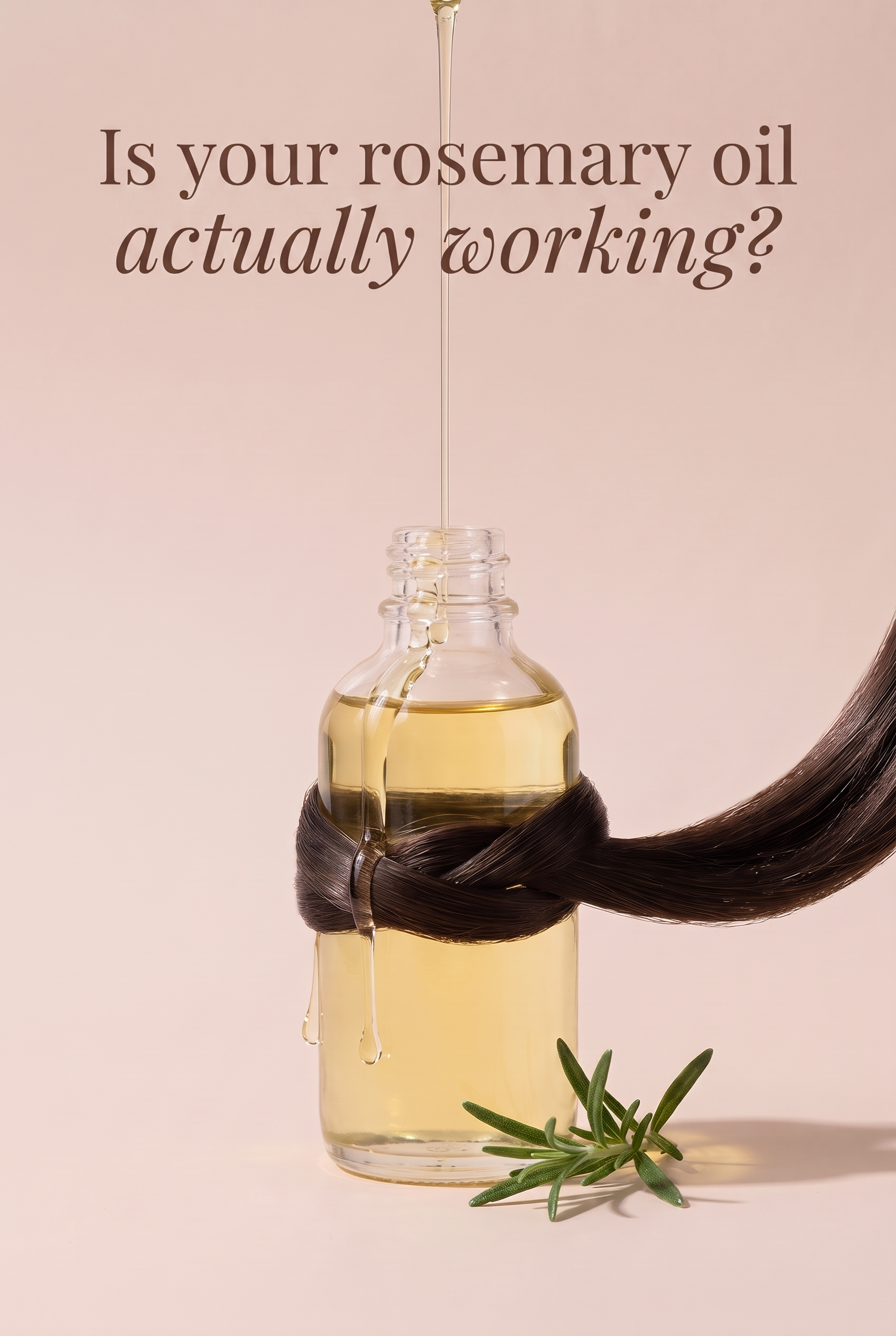
Why Isn’t Your Rosemary Oil Working? 7 Mistakes (and How to Fix Them)
This post contains affiliate links. As an Amazon Associate, we earn from qualifying purchases, at no extra cost to you.
You bought the rosemary oil. You watched the videos. You’ve been using it for weeks. And your hair looks… exactly the same.
If that sounds familiar, you’re not alone, and it doesn’t necessarily mean rosemary oil “doesn’t work.” Most of the time, the problem is how it’s being used. Rosemary oil isn’t a magic potion. It’s a slow, steady scalp habit, and a few small mistakes can quietly cancel out all your effort.
Here are the 7 most common reasons rosemary oil isn’t working, and exactly how to fix each one.
The short version:
- Put it on your scalp, not your ends.
- Dilute pure rosemary essential oil in a carrier oil.
- Massage it in for a few minutes.
- Use it consistently, a few times a week.
- Give it months, not weeks.
First: What Rosemary Oil Can (and Can’t) Do
Rosemary oil became famous partly because of a small 2015 study that compared it with minoxidil, a common hair-loss treatment, in people with pattern hair loss. After six months, both groups saw a similar increase in hair count, and the rosemary group reported less scalp itching. Interestingly, neither group saw much change at the three-month mark.
That’s encouraging, but it’s one small study, not a guarantee. Rosemary oil is best thought of as a supportive scalp ritual: it may help, especially with patience and consistency, but it can’t fix every cause of thinning or slow growth. Keep that in mind as you read the mistakes below.
Mistake #1: Putting It on Your Ends Instead of Your Scalp
This is the most common mistake by far. Many people smooth rosemary oil over the length of their hair like a regular hair oil. It might make your ends look shinier, but hair grows from the follicles in your scalp, so that’s where it needs to go.
The fix: part your hair into sections and apply a few drops directly along each part, right on the skin. A dropper bottle makes this much easier and less messy.
Mielle Rosemary Mint Scalp & Hair Strengthening Oil
A ready-to-use rosemary blend with an easy applicator for your scalp.
Check Price on AmazonCurious whether it lives up to the hype? Read our full Mielle Rosemary Oil review.
Mistake #2: Using Pure Rosemary Essential Oil Undiluted
Pure rosemary essential oil is very concentrated. Putting it straight on your scalp can cause redness, itching, or irritation, and an irritated scalp is the opposite of what you want.
The fix: if you’re using pure essential oil, mix a few drops into a tablespoon of a carrier oil like jojoba, argan, or castor oil before applying. Ready-made blends like Mielle are already diluted, so you can use them as they are. Either way, do a small patch test first, and stop if your skin reacts.
Botanic Hearth Rosemary Oil
A budget-friendly rosemary oil for making your own scalp blend.
Check Price on AmazonGood to know: check the label to see whether you’re buying a pure essential oil or a pre-diluted blend, and follow the directions on the bottle.
Mistake #3: Skipping the Scalp Massage
Dropping oil on your scalp and walking away is only half the routine. Massaging your scalp helps spread the oil evenly and stimulates the area, and many people find the massage itself is one of the most relaxing parts of the habit.
The fix: after applying, use the pads of your fingers (not your nails) to massage in small circles for about 3 to 5 minutes. If your hands get tired, a silicone scalp massager makes it easy and feels great.
HEETA Scalp Massager Shampoo Brush
Soft silicone bristles for an easy, relaxing scalp massage.
Check Price on AmazonMistake #4: Quitting Too Soon
Hair grows slowly, roughly about half an inch a month for most people, and every strand goes through a long growth cycle. That’s why changes take time to show. Remember that in the 2015 study, the difference showed up at six months, not three.
The fix: commit to at least three to six months before you judge the results. Take a photo of your part and hairline in the same light once a month, so you can compare honestly instead of guessing in the mirror every day.
Mistake #5: Using It Only Once in a While
Using rosemary oil twice in one week and then forgetting about it for three weeks won’t give it a fair chance. Like most scalp routines, consistency matters more than intensity.
The fix: pick a realistic schedule, like two or three times a week, and tie it to something you already do, such as the night before wash day. If you want a simple structure to follow, try our 30-day hair growth challenge.
Mistake #6: Using Too Much (or Never Washing It Out)
More oil doesn’t mean faster results. Too much can weigh your hair down, make your roots look greasy, and build up on your scalp, especially if you have fine hair or an oily scalp.
The fix: a few drops per section is enough. Leave it on for a few hours or overnight if your scalp tolerates it well, then wash it out with a gentle shampoo. If your scalp feels oily or itchy, use less and wash it out sooner.
Mistake #7: Expecting Rosemary Oil to Fix Every Cause of Hair Loss
Hair can thin or stop growing for many reasons: genetics, stress, low iron or other nutrients, thyroid problems, hormonal changes after pregnancy, tight hairstyles, or heat damage that makes hair break before it gets long. Rosemary oil can’t fix all of these.
The fix: if you’re losing hair suddenly, seeing bald patches, or noticing a lot of shedding, talk to a doctor or dermatologist. And if your hair seems to break more than it grows, read Why Isn’t My Hair Growing? for the most common causes.
The Right Way to Use Rosemary Oil: A Simple Routine
- Start with a clean, dry or slightly damp scalp.
- Part your hair into sections.
- Apply a few drops of a diluted rosemary oil or ready-made blend along each part.
- Massage for 3 to 5 minutes with your fingertips or a scalp massager.
- Leave it on for a few hours or overnight, if your scalp is comfortable.
- Wash it out with a gentle shampoo.
- Repeat two or three times a week, and check your progress monthly with photos.
Want more options? See our picks for the best hair growth oils on Amazon, or our full guide to rosemary oil for hair growth.
Rosemary Oil Not Working: Your Questions Answered
How long does it take for rosemary oil to work?
Give it at least three to six months of consistent use. Hair grows slowly, and in the best-known study, the noticeable difference showed up around six months.
Can I leave rosemary oil in my hair overnight?
Many people do, as long as the oil is properly diluted and their scalp doesn’t feel irritated. If you notice itching or redness, wash it out sooner or use it less often.
How often should I use rosemary oil?
Two or three times a week is a realistic, consistent schedule for most people.
Can rosemary oil make my hair fall out?
It’s normal to see some shedding every day. But if your scalp becomes irritated or you notice a sudden increase in shedding, stop using it and check with a dermatologist.
Is rosemary oil safe for all hair types?
Most hair types can use it, but if you have a sensitive scalp, a skin condition, or you’re pregnant, it’s a good idea to check with your doctor first. Always patch test a new product.
The Bottom Line
If your rosemary oil isn’t working, the fix is usually simple: put it on your scalp, dilute it, massage it in, use it consistently, and give it a few months. And if your hair loss is sudden or severe, get it checked, because some causes need more than an oil.
Mielle Rosemary Mint Scalp & Hair Strengthening Oil
The easiest way to start a consistent rosemary scalp routine.
Check Price on Amazon